Fairness
Supports more consistent operational handling.
04 / Professional Project — Internal Business Application
Bringing Randomization, Governance and Traceability to Inspection Committee Formation
A rule-based workflow application for committee formation, reporting, communication and audit history.
01
A rule-based workflow application for committee formation, reporting, communication and audit history.
A rule-based application for inspection committee formation incorporating controlled randomization, correction/replacement, standardized reporting, automated communication and audit history.
02
Inspection committee constitution can involve eligibility rules, categories, random selection, corrections, replacement and reporting.
03
Convert committee formation into a structured, rule-based digital workflow.
04
Manual committee handling can increase administrative effort and make consistent traceability harder.
Committee Need
Manual Member Selection
Reason / Replacement Handling
Report Preparation
Communication / Records
05
ICMS converts committee formation into a structured rule-based workflow with controlled randomization and audit history.
06
1. Create Committee
2. Select Chemical Lab Member
3. Randomize Other Members
4. Capture Lot / Sample Details
5. Generate PDF Report
6. Email Committee
7. Correction / Replacement
8. Audit History
07
08
Selected application screens illustrating controlled committee formation, governance and inspection-process traceability. Production-sensitive information has been excluded from the portfolio.
Governance Dashboard
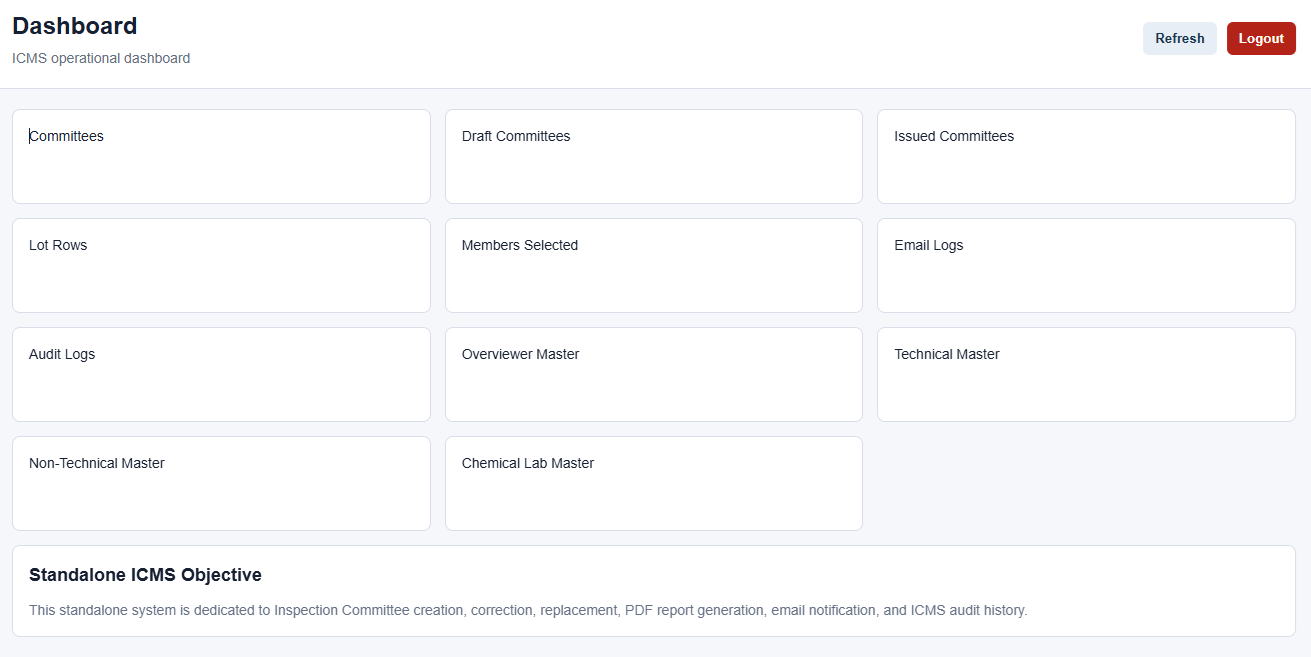
Operational Visibility
Provides consolidated visibility across committee generation, inspection lots, member selection, communications, audit activity and supporting master data.
Committee Formation
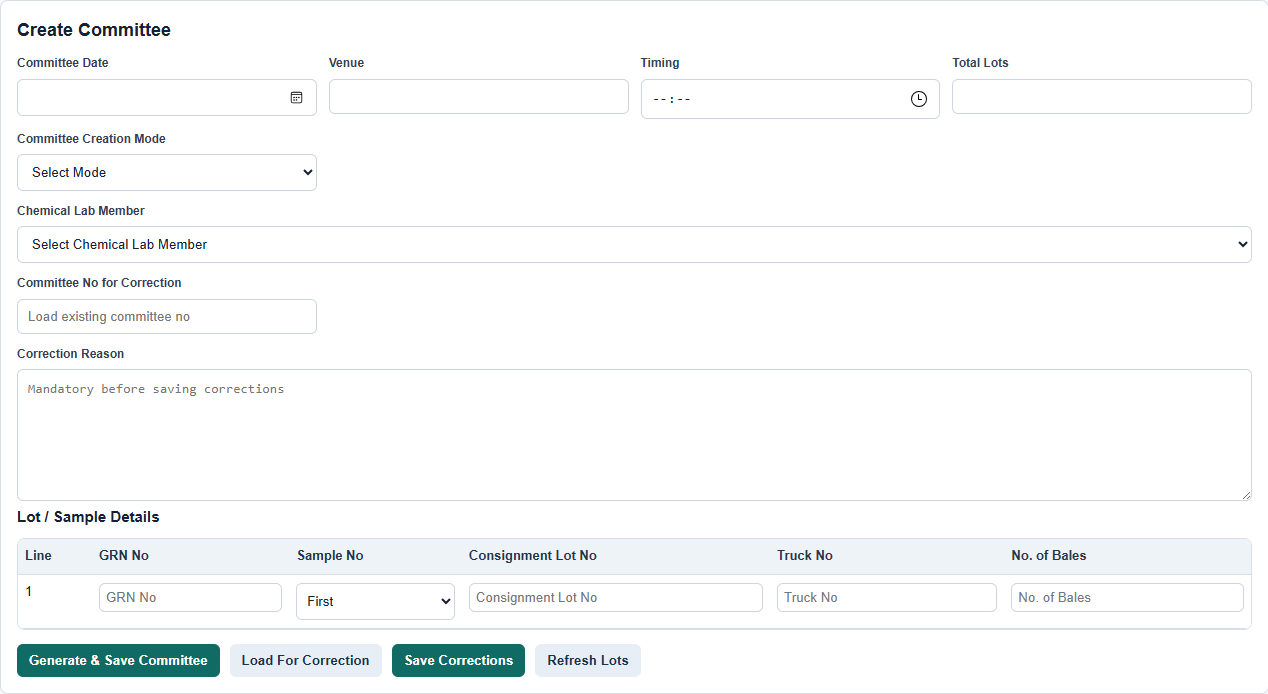
Controlled Randomization
Creates inspection committees through a structured workflow using inspection details, eligible member categories and controlled random selection.
History / Correction / Replacement / Communication
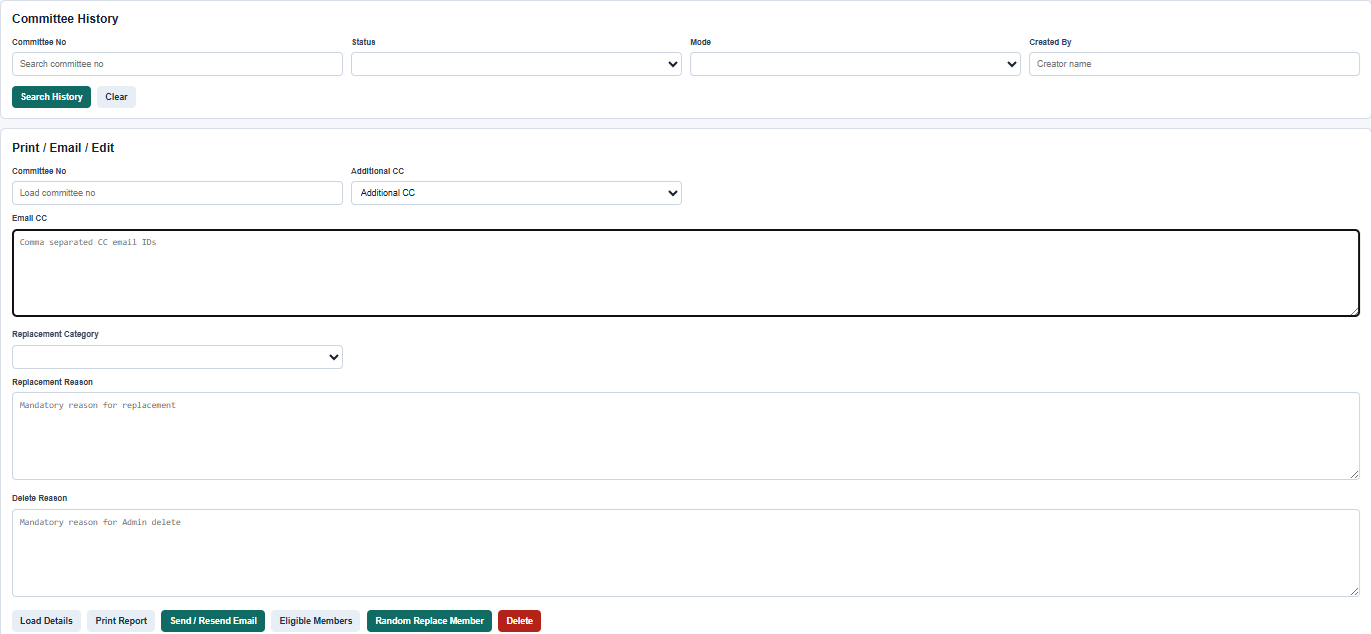
Governance & Auditability
Maintains committee history with controlled print, communication, correction and member-replacement actions while preserving operational traceability.
Supporting Master & Eligibility Controls
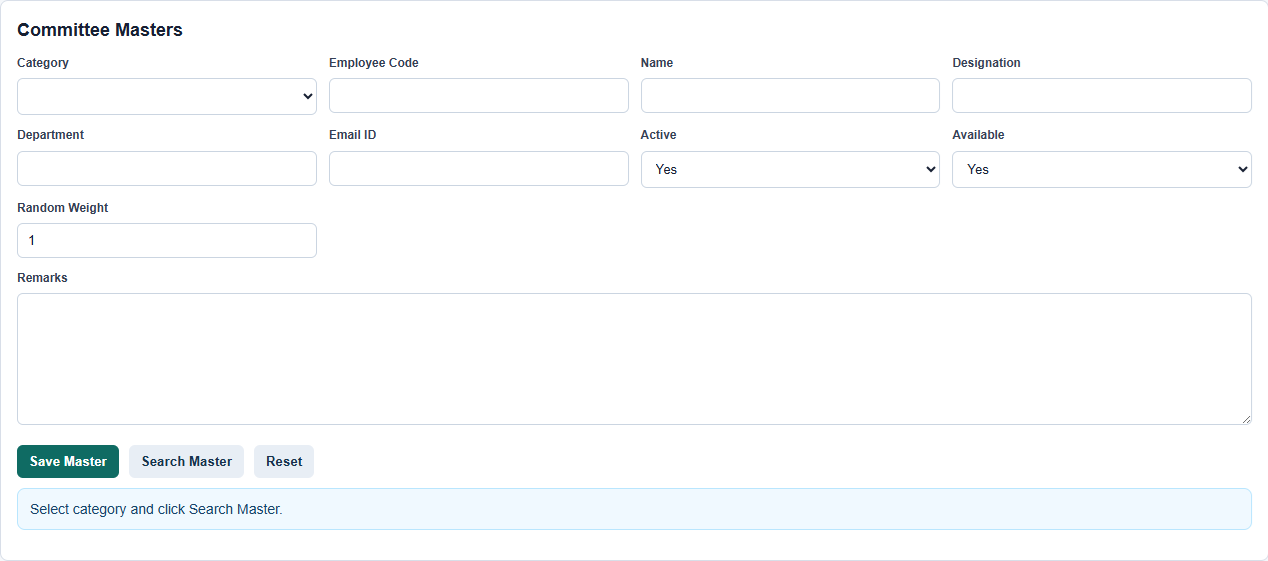
Master Data Control
Maintains the member pool and eligibility attributes used by the committee-selection process, including category, organizational information, availability and controlled selection parameters.
Screens and transaction information shown on this portfolio have been sanitized for confidentiality.
09
A rule-based application flow connecting master data, selection logic, report generation, email communication and audit records.
Layer 1
Authorized User
Layer 2
HTML/CSS/JavaScript Interface
Layer 3
Google Apps Script Rules / Randomization Logic
Layer 4
Google Sheets Master and Audit Records
Layer 5
PDF Reports / Gmail Communication
10
Supports more consistent operational handling.
Supports more consistent operational handling.
Keeps information structured for later review.
Supports more consistent operational handling.
Reduces repetitive coordination effort.
Clarifies an important business outcome theme.
Keeps information structured for later review.
11
12
The application was designed around governance requirements first, with rule handling, reporting and auditability shaping the implementation.
13
14
Potential Evolution