Ritesh Kumar Thakur
All projects

03 / Professional Project — Internal Business Application

Mini ERP – MM Module

Designing an Integrated Materials Management System from Requisition to Inventory

A broad Materials Management application connecting requisition, approval, procurement, receipt, quality, inventory and issue processes.

Material MasterVendor MasterPurchase RequisitionApproval WorkflowContract ManagementPurchase OrderGoogle Apps ScriptJavaScriptGoogle SheetsHTML/CSS

01

Overview

A broad Materials Management application connecting requisition, approval, procurement, receipt, quality, inventory and issue processes.

An integrated Materials Management application connecting requisition, approval, procurement, goods receipt, quality, inventory, reservation and material-issue processes.

02

Business Problem

Materials Management consists of interconnected processes that cannot be represented well as isolated forms.

  • master data
  • requisitions
  • financial review
  • approvals
  • procurement
  • contracts
  • purchase orders
  • goods receipt
  • quality inspection
  • stock posting
  • reservations
  • material issues
  • inventory visibility

03

Objective

Design an integrated application connecting the Materials lifecycle through structured transactions, roles, approvals and operational workbenches.

04

Process Before Digitalization

A broad process can become fragmented when requirement, approval, procurement, receipt and inventory activities are handled as disconnected modules.

  1. 01

    Requirement

  2. 02

    Review / Approval

  3. 03

    Procurement

  4. 04

    Receipt / Quality

  5. 05

    Stock / Issue

Operational friction

  • isolated forms
  • workflow discontinuity
  • limited inventory visibility
  • approval and exception complexity

05

Solution

An integrated MM application designed around connected transactions, approval roles, procurement workbenches and inventory visibility.

  • material and vendor masters
  • purchase requisition workflow
  • finance and approval routing
  • buyer and HOD workbenches
  • contract and PO creation
  • goods receipt and quality inspection
  • stock posting
  • reservation and material issue

06

Workflow

  1. 01

    1. PR Creation

  2. 02

    2. Finance / Forwarder

  3. 03

    3. Approver 1 / Approver 2

  4. 04

    4. Materials HOD

  5. 05

    5. Buyer / PO Creation

  6. 06

    6. Goods Receipt

  7. 07

    7. Quality Inspection

  8. 08

    8. Stock Posting

  9. 09

    9. Reservation Creation

  10. 10

    10. Reservation Issue / Posting

07

Key Capabilities

Master Data

  • Material Master - Core material reference data.
  • Vendor Master - Supplier reference information.

Requirement & Approval

  • Purchase Requisition - Structured requirement capture.
  • PR Workflow - Routing from finance review to approvals.
  • Finance / Forwarder - Review and forwarder checkpoint.
  • Approver workflow - Multi-level approval movement.
  • Materials HOD Workbench - Domain review and control point.

Procurement

  • Buyer Workbench - Procurement processing actions.
  • Contract Agreement - Structured contract references.
  • Purchase Order - PO creation and continuity.

Receipt & Quality

  • Goods Receipt - Receipt capture connected to procurement records.
  • Quality Inspection - Quality-stage visibility before stock posting.
  • Stock Posting - Inventory update after accepted receipt.

Inventory

  • Reservation Management - Material reservation workflow.
  • Material Issue - Issue processing and posting.
  • Stock Ledger - Inventory movement visibility.
  • Stock Summary - High-level inventory visibility.

08

Application Screens

Selected application screens illustrating the end-to-end workflow. Production-sensitive information has been excluded from the portfolio.

System Overview
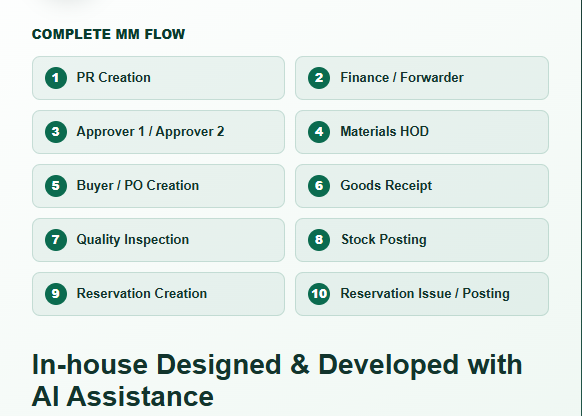
Mini ERP – MM Module lifecycle overview showing requisition, approval, procurement, goods receipt, stock posting, reservation and issue flow.

Integrated Materials Management Lifecycle

Featured

A connected MM workflow spanning requisition, approvals, procurement, goods receipt, inventory, reservation and material issue.
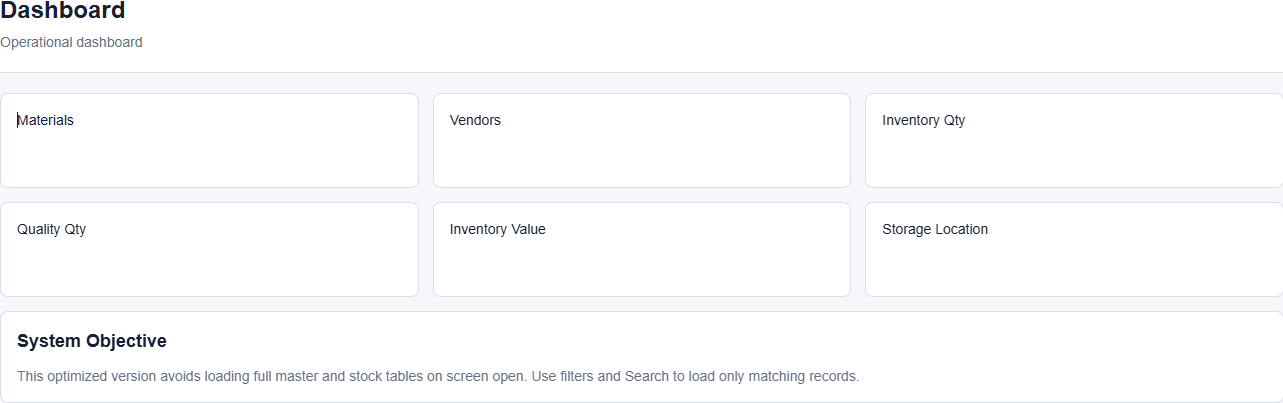
Mini ERP Materials dashboard showing operational metric categories with sensitive totals withheld.

Materials Operations Dashboard

Featured

Operational Visibility

Provides consolidated visibility across materials, vendors, inventory, quality quantities and storage locations.

Requirement to Procurement
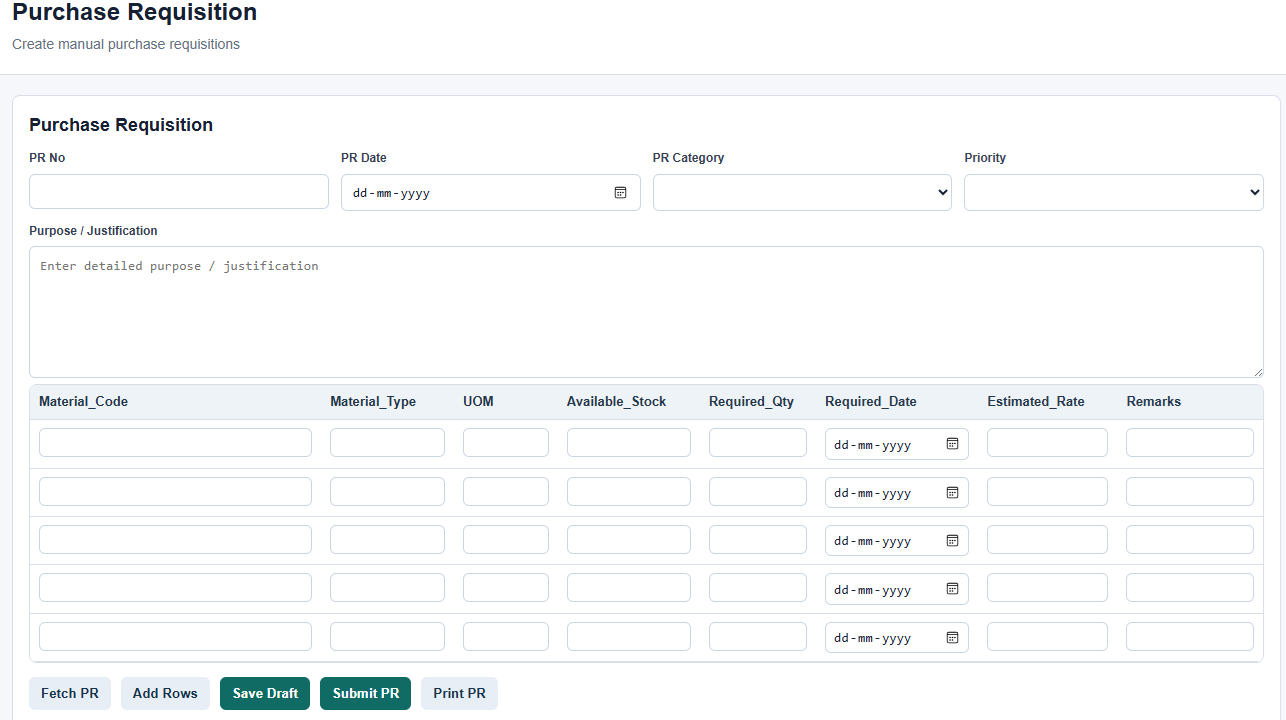
Mini ERP purchase requisition form showing header fields, justification and material line items.

Purchase Requisition

Featured

Captures requisition purpose, priority, required dates and material line items before submission into the approval workflow.
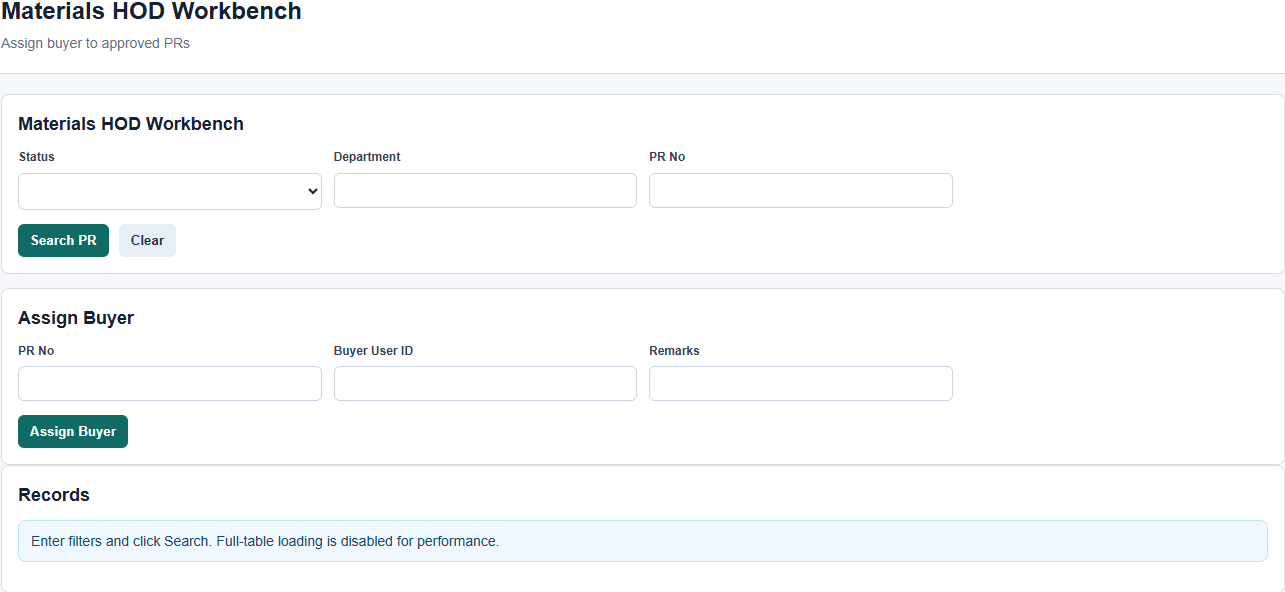
Mini ERP Materials HOD workbench showing PR search and buyer assignment fields.

Approval & Buyer Assignment

Standard

Routes approved requisitions through Materials HOD review so buyers can be assigned for procurement action.
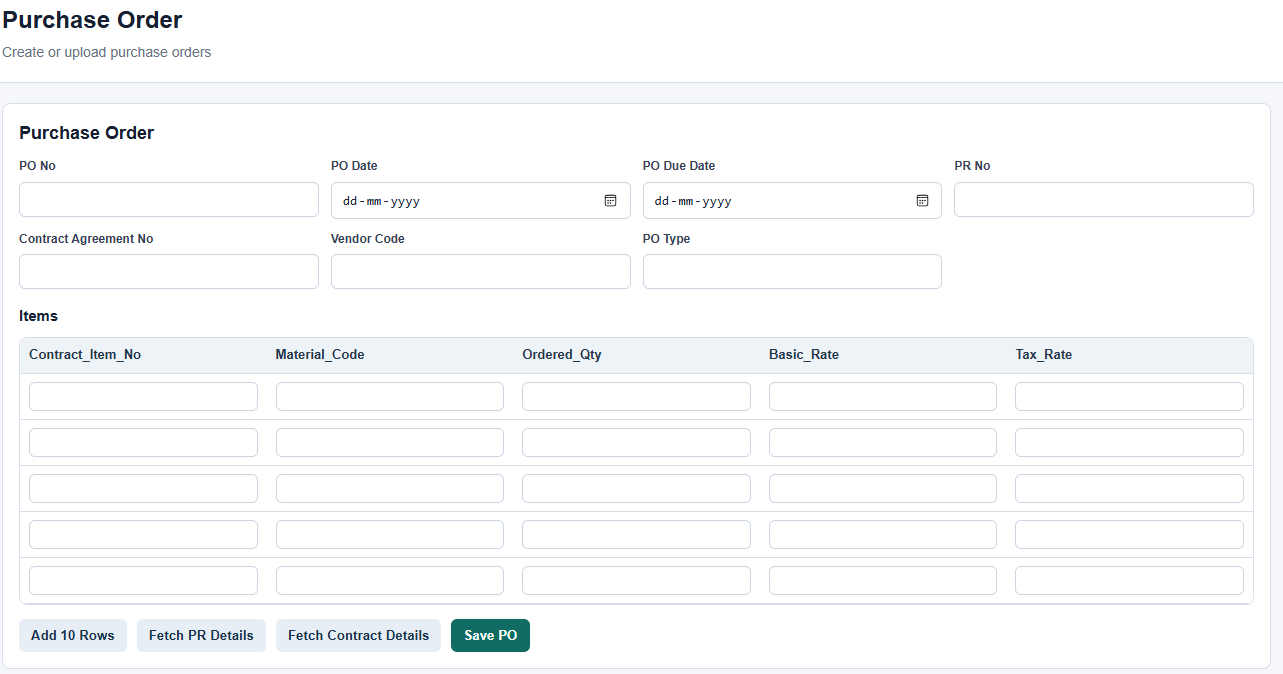
Mini ERP purchase order form showing PR references, contract fields and purchase order line items.

Purchase Order Creation

Featured

Converts approved requirements into purchase orders using PR and contract references with item-level procurement details.

Receipt to Issue
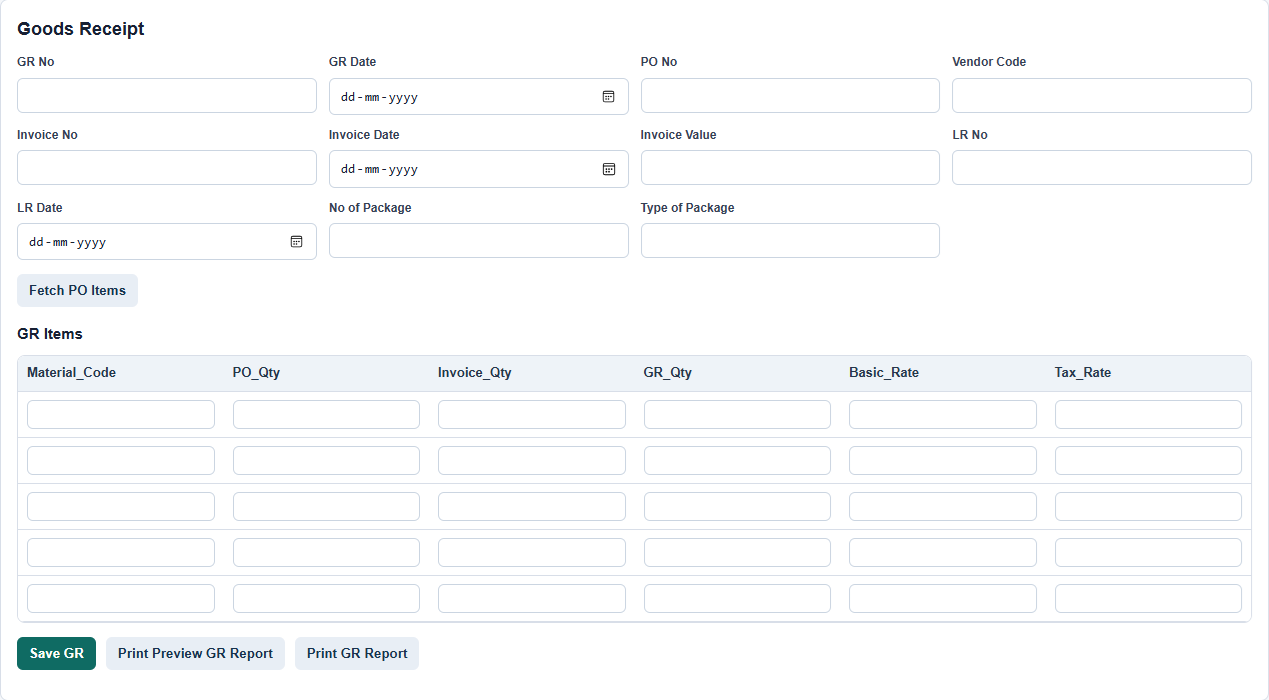
Mini ERP goods receipt form showing purchase order, invoice and GR item fields.

Goods Receipt Processing

Featured

Records received materials against purchase and invoice references, linking GR items to downstream reporting and stock movement.
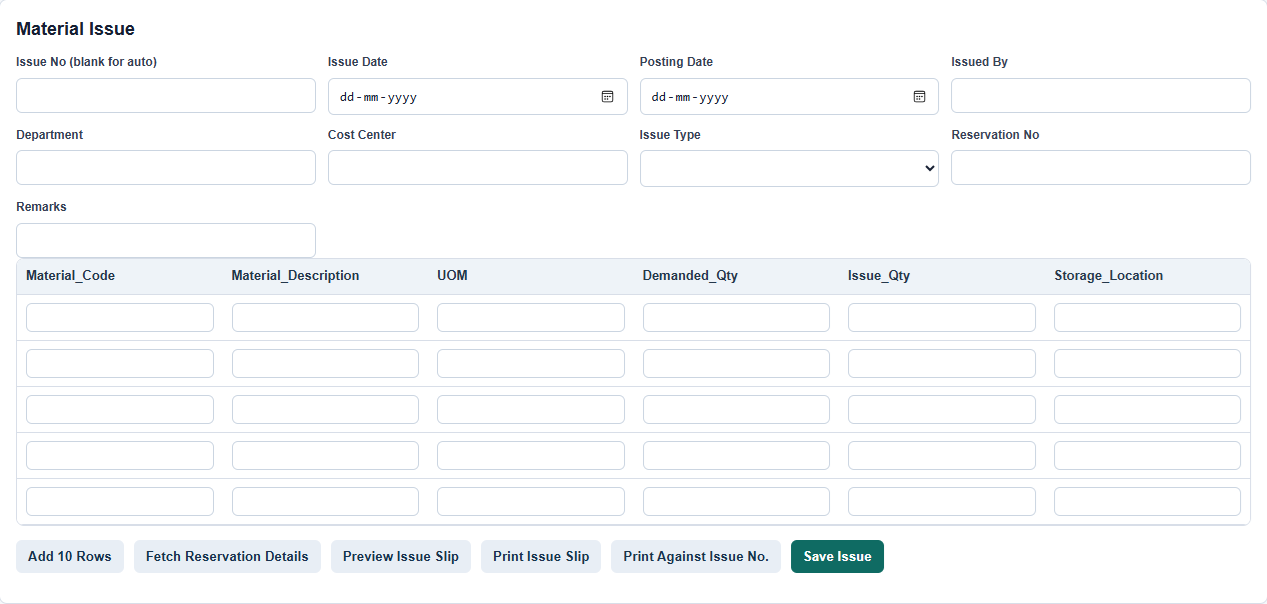
Mini ERP material issue form showing reservation details, demanded quantities and issue slip actions.

Reservation & Material Issue

Featured

Supports reservation-based issue processing with demanded and issued quantities, storage locations and issue-slip outputs.

Stock Tracking & Reporting
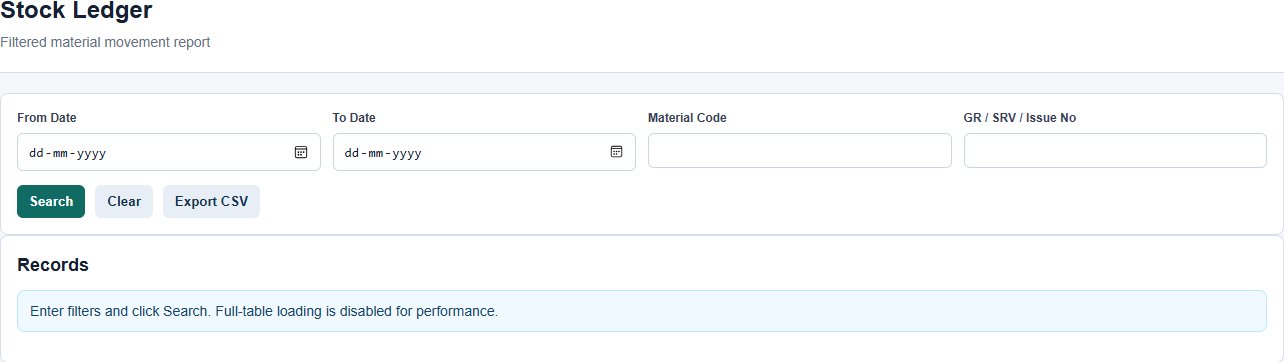
Mini ERP stock ledger screen showing material movement filters and export capability.

Stock Ledger & Movement Visibility

Standard

Operational Monitoring

Supports transaction-level stock tracking through material, date, GR/SRV and issue-based search with export capability.

Screens and transaction information shown on this portfolio have been sanitized for confidentiality.

09

System Architecture

Conceptual Application Architecture

A domain-led application structure connecting master data, workflow logic, workbenches, documents and inventory views.

  1. Layer 1

    Role-Based Users

  2. Layer 2

    HTML/CSS/JavaScript Application

  3. Layer 3

    Google Apps Script Business Logic

  4. Layer 4

    Google Sheets Structured Transaction Records

  5. Layer 5

    Gmail / Google Drive / Reports

10

Business Value

Integrated Workflow

Connects work across process stages.

Process Continuity

Connects work across process stages.

Role-Based Control

Clarifies an important business outcome theme.

Inventory Visibility

Makes process status easier to understand.

Structured Approvals

Clarifies an important business outcome theme.

Auditability

Keeps information structured for later review.

Operational Digitization

Connects work across process stages.

11

Design Challenges

  • Keeping a broad Materials lifecycle connected without overwhelming users.
  • Modeling roles, approvals and exceptions before implementing screens.
  • Avoiding sensitive financial or inventory exposure in portfolio material.

12

Development Approach

Domain-Led, AI-Assisted Application Development

The system was developed through a domain-led, AI-assisted approach in which business-process understanding, functional requirements, workflow logic, testing and operational refinement guided the application architecture.

Design concepts

role-based accessworkflow routingmulti-level approvalmaster datastructured transactionspartial processingdocument generationsearch-first performanceemail notificationsauditabilityinventory visibility

13

Lessons Learned

  • Integrated systems need process modeling before screen design.
  • Approval workflows become reliable when roles and exceptions are explicit.
  • Inventory visibility requires careful master-data and transaction discipline.

14

Future Evolution

Potential Evolution

  • A scalable cloud architecture with stronger identity and authorization.
  • Firestore or another managed data layer for larger transaction volumes.
  • Configurable workflow rules and richer mobile experiences.